
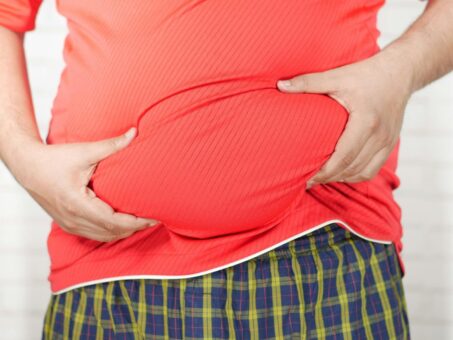
It happens almost overnight. You wake up, and your stomach feels relatively flat. You drink your coffee, eat a "clean" salad for lunch, and by 4:00 PM, you can’t button your jeans. You look down and wonder: Did I really gain five pounds in six hours? Or is something else going on?
If you are a woman between 40 and 55, this is the "Menopause Belly" paradox.
For years, we’ve been told that weight gain is a simple equation of "calories in vs. calories out." But in perimenopause, that equation breaks down. The "Frustrated Achiever"—the woman who works out and eats right—is often battling a complex biological storm.
The expansion of your midsection is rarely just "fat." It is often a combination of hormonal redistribution (visceral fat) and systemic inflammation (bloat). Understanding the difference is critical because you cannot diet your way out of inflammation.
Here is the definitive guide to decoding your midsection, differentiating between fat and fluid, and understanding what your hormones are trying to tell you.
The "Pinch Test": Distinguishing Adipose Tissue from Inflammation
To solve the problem, we must first diagnose it. While menopause belly fat causes are linked to long-term hormonal shifts, bloating is an acute reaction.
Use this checklist to identify what is happening in your body right now:
1. The Timeline Test
- It’s likely FAT if: The size of your midsection is consistent from the moment you wake up to the moment you go to bed. It has accumulated slowly over months or years.
- It’s likely BLOAT if: Your stomach starts flat in the morning and expands significantly throughout the day (the "morning flat, evening pregnant" phenomenon).
2. The Tactile Test
- It’s likely FAT if: You can grab a soft roll of skin and tissue (subcutaneous fat). Note: If the belly is hard and protruding but doesn't fluctuate, this may be visceral fat.
- It’s likely BLOAT if: Your abdomen feels tight, drum-like, hard to the touch, and uncomfortable. It feels physically distended, as if there is a balloon inside.
3. The Sensation Test
- It’s likely FAT if: There is no physical pain associated with the size, other than the frustration of clothes not fitting.
- It’s likely BLOAT if: You experience gas, burping, rumbling, cramping, or a feeling of "heaviness" after meals.
Expert Note: Most women in perimenopause are dealing with both. The hormonal belly shape is often a layer of visceral fat pushed outward by severe digestive inflammation.
The Science of the Shift: Why Is This Happening?
Why does your body suddenly seem to be working against you? It isn't a lack of willpower; it is a shift in biochemistry.
1. The "Estrogen Dump" and Visceral Fat
In your fertile years, estrogen directs fat storage to your hips and thighs (subcutaneous fat). As estrogen levels fluctuate and eventually plummet during perimenopause, this signal is lost.
Simultaneously, your body attempts to hold onto estrogen by producing it in fat cells. To protect your vital organs during this volatile time, the body preferentially stores fat deep inside the abdomen, surrounding the liver and intestines. This is perimenopause visceral fat. It is metabolically active tissue that acts like an organ itself, increasing inflammation.+1
2. The Progesterone Drop and the "Slow Gut"
While everyone talks about estrogen, the unsung hero of a flat stomach is progesterone. Progesterone is a natural diuretic and muscle relaxant.
When progesterone levels crash (often the first sign of perimenopause), two things happen:
- Water Retention: Without progesterone’s diuretic effect, you hold onto fluid.
- Reduced Peristalsis: Digestion slows down. Food sits in your digestive tract longer, fermenting and creating gas. This is a primary driver of menopause digestive problems.+1
3. The Cortisol Connection
If you are searching for cortisol weight gain symptoms, look at your waistline. High stress (cortisol) mobilizes glucose into the bloodstream. If you don't burn that energy physically, cortisol deposits it directly as belly fat because fat cells in the abdomen have four times more cortisol receptors than fat cells elsewhere.+1
3 Immediate Strategies to De-Bloat (The Reset)
If you are dealing with perimenopause bloating, a calorie deficit will not help. In fact, restriction often increases cortisol, making the bloat worse. You need an inflammation reset.
1. Eliminate the "Healthy" Irritants
Many foods that cause menopause bloating are actually "healthy" foods that a compromised gut can no longer handle efficiently.
- Raw Cruciferous Veggies: Broccoli, kale, and cauliflower are hard to digest. Switch to cooked versions.
- Artificial Sweeteners: Sugar alcohols (sorbitol, xylitol) found in "diet" foods wreak havoc on the perimenopausal microbiome.
- Sparkling Water: Carbonation adds air to an already distended system. Switch to flat water with lemon (a natural diuretic).+1
2. Prioritize Anti-Inflammatory Proteins
Shift your focus from "low calorie" to "low inflammation." Incorporate Omega-3 rich foods like salmon, walnuts, and flaxseeds. These help counteract the inflammatory cytokines released by visceral fat.
3. The "Rest and Digest" Protocol
You cannot digest food when you are in "fight or flight" mode. Cortisol shuts down digestion.
- Action Step: Take 5 deep, diaphragmatic breaths before every meal. This signals your parasympathetic nervous system to activate digestion, reducing fermentation and bloat.
When to Dig Deeper: Fat vs. Fluid vs. Function
If you have tried "eating clean" and exercising, yet the midsection weight remains stubborn, it is time to stop guessing and start testing.
The "Menopause Belly" is often a symptom of Estrogen Dominance or severe Cortisol Dysregulation. Standard blood tests often miss these nuances because they measure total hormone levels, not the bioavailable hormones active in your tissues.
This is where the The Balanced Bodies Code differs. We don't guess. Using diagnostic Saliva Hormone Testing, we can see exactly why your body is holding onto weight. Is it low progesterone causing bloat? Is it high cortisol causing visceral fat storage?
Stop Fighting Your Biology
You are not broken, and you are not crazy. Your body is simply adapting to a new hormonal reality. The key to shrinking the midsection isn't another sit-up or a starvation diet—it’s about metabolic repair, gut health optimization, and hormonal balance.

 FIT LIFESTYLES BY KERRI HALLMAN.